#508 Common Nighthawk

Sunday, August 29th, 2010

Common Nighthawk has been off my life list for an embarrassingly long time despite the fact that I’ve lived smack in the middle of its breeding range for about the last 20 years. To make matters worse, this is a bird that can be seen easily from a mile away; and it’s not really hard to identify it. The only thing that makes the common nighthawks a little challenging is that it does come out in the evening after most birders who gone home for the day. If you get up at 6 AM to catch the dawn chorus, you’re going to be pretty tired by the time you see your first Nighthawk. It pretty much requires a special trip. Nonetheless, it isn’t that hard to find and yet for reasons I can’t fully explain, I have missed it time and time again for years. For instance, a few years ago nighthawks were flying over the Turtle Pond in Central Park every night for several weeks until the night I took the subway out there to see them at which point apparently every last one of them had decided to migrate south. I have gone on nighttime walks in Prospect Park, and shown up two minutes after nighthawks flew over and everyone else saw them but me. I have been out to numerous locations where they are known to fly nightly and still managed to miss them time and time again. Most recently, yesterday, Saturday, I was on a Brooklyn Bird Club trip to Jamaica Bay when the leader got separated from the group. He saw two nighthawks fly over while I was busy looking at yet another Black-throated Blue Warbler.
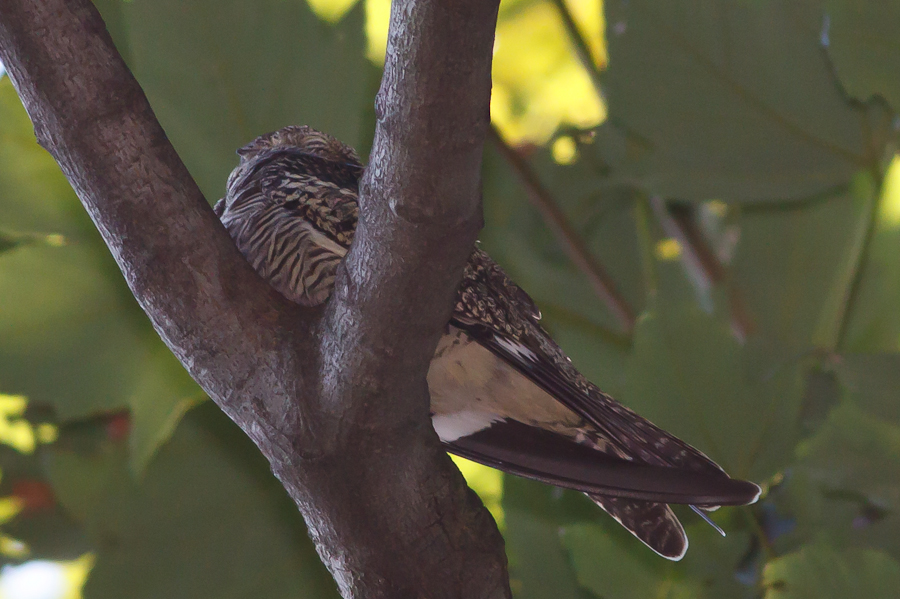
Common Nighthawk perched
(more…)

#506 AND #507 Winter Wren

Thursday, August 19th, 2010

Surely I’ve seen a Winter Wren before now? Well, yes I have. Many times and on more than one continent. However, the American Ornithological Union has just split the species into 3, Pacific Wren (Troglodytes pacificus) in the Pacific Northwest, Winter Wren (Troglodytes hyemalis), back here in New York, and Wren (Troglodytes troglodytes) in Eurasia. In fact, I’ve seen all three, Troglodytes hyemalis from New York and other locations, Troglodytes pacificus in the Bay Area in California, and Troglodytes troglodytes from Europe. I’m not sure which I saw first, Eastern or European. It may actually have been the European species back when I first started getting serious about this.

#505 Hudsonian Godwit

Thursday, July 22nd, 2010

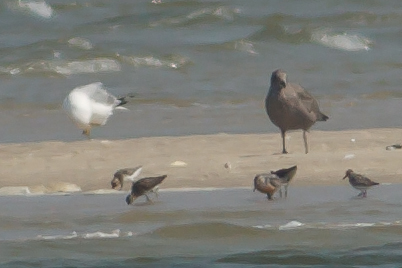
Sunday morning Janet Schumacher and I drove out to Cupsogue Beach County Park on the south shore of Long Island to look for the Hudsonian Godwit that had been reported there since the previous weekend. I first saw it at low tide around 9:15 AM on the first sandbar in the bay, visible from just past the trailer parking area. However the bill looked a little off and I wasn’t sure before the bird took off. Could have been a Dowitcher in intermediate plumage. Then, after walking a mile out to the point and back again, we relocated it at exactly the same spot and got much better looks at it, including a few (bad) photographs.

Hudsonian Godwit on sandbar with Gulls, Dowitchers and other shorebirds

At least I hope that’s the bird. (Lower right foreground) It was easier to see through the scope which gives you much several times more magnification than my 400mm lens (roughly equivalent to a pair of binoculars). To get this much I had to scan along the sandbar snapping away and then blow up the photos later at home.

(more…)

#504 Kentucky Warbler

Saturday, May 22nd, 2010

Today I slept in and went down to Prospect Park around 8:30 AM where I promptly ran into Tom Stephenson who informed me that Rafael Campos had found a Kentucky Warbler in the Vale of Cashmere. We hurried down to the Vale just in time to see it fly across the grassy path leading out to Nellie’s lawn. Unfortunately, all we really saw was a small brown bird fly very fast across in front of us. There was no way to ID it. However after a few minutes of waiting it was spotted again, and I got one good look at it. I saw it for less than a second, and I didn’t get a photograph, but it’s distinctive enough that there really wasn’t any doubt. It looks a lot like the Common Yellowthroat except instead of a black mask it has a slightly more patterned brown mask. The Kentucky Warbler is a Southern bird that usually doesn’t get as far north as New York City, but every year a few birds overshoot their marks and end up in Central Park or Prospect Park or Forest Park and similar environs.

(more…)

Come Birding with Me

Friday, May 14th, 2010

Tomorrow, Saturday, May 15 I will be leading a Brooklyn Bird Club field trip to the Brooklyn Botanic Gardens. We’ll Start outside the Eastern Parkway entrance at 9:20 AM, just down the street from the Brooklyn Museum stop on the 2/3. Spring migration is in full swing so I’m hopeful that we will have many interesting warblers, thrushes, tanagers, and other uncommon species. As bird club trips go, this is a fairly relaxed one. We start late and finish early, so it’s a really nice walk for beginners or folks just dipping their toe into the water for the first time. Bring binoculars. Hope to see you there.

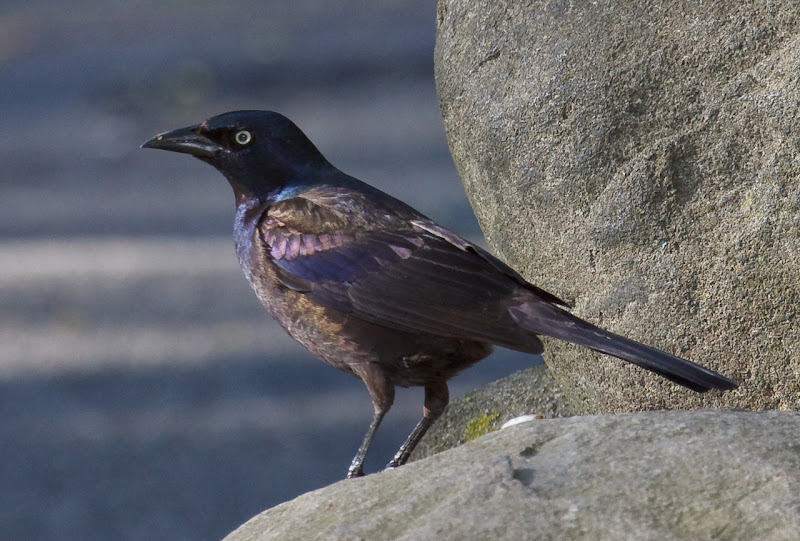
Common Grackle
Common Grackle at the Brooklyn Botanic Garden, 2010-05-06

Happy International Migratory Bird Day!

Saturday, May 8th, 2010

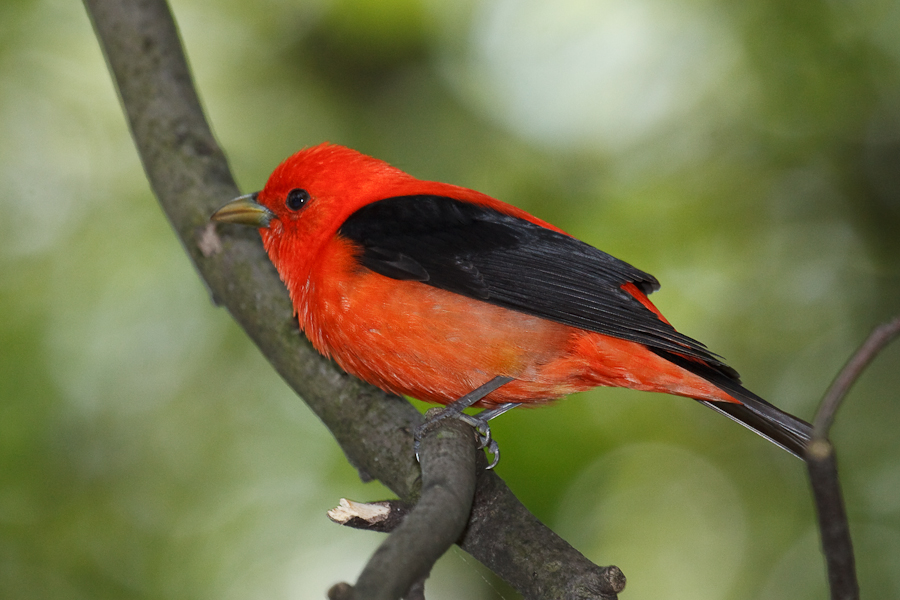
Bright red bird with black wings
Scarlet Tanager, Piranga olivacea, Brooklyn Botanic Garden, 2010-05-08